
Meeting Every Student's Needs with Universal Design for Learning
It was only 9:30 in the morning and a student (I’ll call her Jenny) was already in the office complaining of a stomach ache. I noticed it was the third time in the past week that she had come and it was always during math class. I knew Jenny loved math and wondered what was happening. Sometimes, students can develop mysterious ailments during class when something is not right or is too hard.
So I met with Jenny. We noticed, together, that she always feels better after math class. Then I met with Jenny’s teacher who said that Jenny had a very good understanding of numbers. So what was happening? Every class began with a “word problem" that Jenny needed to solve and we realized that she struggled with putting her thinking down on paper. When Jenny was offered several other ways of showing her understanding — other than writing things down — she was able to complete the question and her stomach aches began to disappear.
By allowing Jenny to explain her answers using manipulatives or by talking into her computer or creating drawings, her teacher removed the barrier of writing in math. Soon, every student in the class was offered this opportunity because what worked for Jenny could be offered to the whole class.
As an educator, my focus has always been on connecting with students and ensuring that they are growing and improving their skills. Jenny’s experience shows that we, as educators, need to find ways to design our lessons and use methods that remove barriers to students’ learning. This important concept is known as Universal Design for Learning (UDL).
What does UDL mean for our lesson planning? When we create lessons and units, we naturally consider the curriculum expectations — what we want kids to know and be able to do. These expectations come from our Ontario curriculum or, at Bialik, from our incredible Jewish Studies curriculum.
The challenge, and the truly hard part, is figuring out how to teach the diverse group of children in front of us. Classrooms are filled with a spectrum of students. We have students who are incredible artists, others who like athletics, some who may need extra support, and some who are neurodivergent.
To understand this diversity, our staff focussed on the work of Katie Novak and used her analogy of a dinner party. Imagine planning a dinner party for ten people and serving only one dish: mac and cheese, thinking "Everybody loves mac and cheese." But what happens when you learn that a guest is lactose intolerant? What if the dish was made with regular macaroni and someone else is gluten-free? What about your guests who simply don't like cheese and would prefer something else?
This scenario is exactly like having children in a classroom. They are not all one kind of learner. They do not all have the same interests, enjoy the same activities or learn in the same way.
Our job as educators is to take this understanding and apply it to our lesson plans. We must look at the curriculum expectations and ensure there is a way for all students to engage with them. The core goal of UDL is to avoid placing barriers in front of students before they even step into the classroom.
Consider the diversity within our school. We have English Language Learners who may not read, write or speak English as well as others. We have children who are not comfortable with reading Hebrew but are fluent in speaking the language. We also have children who get bored easily as they quickly understand content when it’s presented to them. Regardless of where the children start, our goal is always to move them to the next level.
What does UDL look like in the classroom? It takes many forms, offering choices and varied methods of instruction:
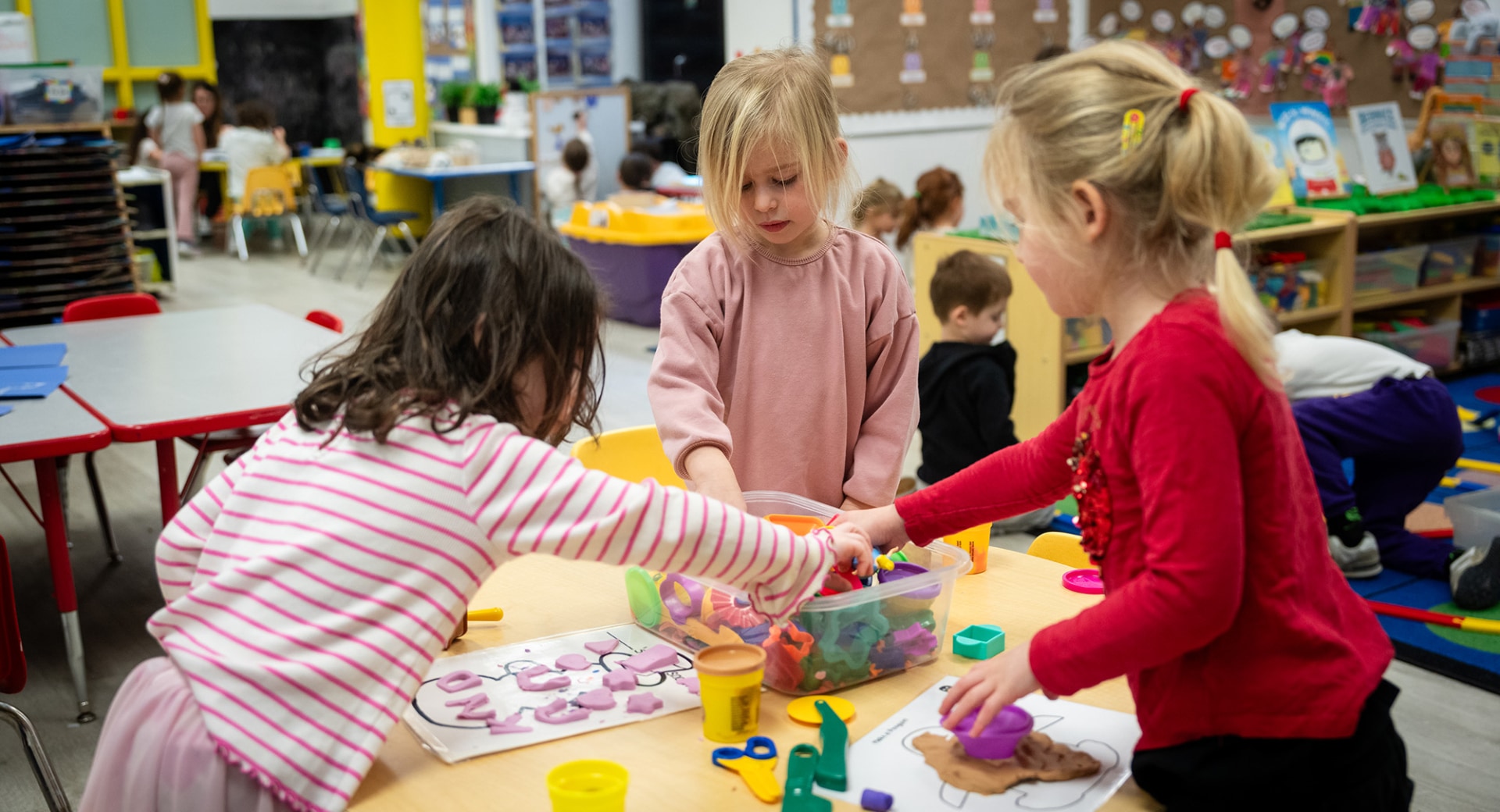
- Children might be sitting on the carpet in a circle, engaged with individual or group activities in front of them.
- Students needing to answer a question might have choices around the classroom and physically move to a spot to participate in a debate.
- It could be a full class lesson delivered by the teacher.
- It might involve children in small groups trying to solve a problem using various tools at their disposal.
Universal Design for Learning is going to look like a lot of different things to suit the many learning needs of students. But in the end, it ensures that children are learning and thinking critically about the expectations, and have multiple ways to show us what they know. UDL is about growth and opportunities for every child, regardless of how they learn or what their strengths and skills are. We are here to scaffold and help them along the way. That’s what we do best, and that is what Universal Design for Learning is all about.
Remember Jenny? She still had to demonstrate her understanding of the math word problems — those expectations didn’t change — but we changed the way she was able to show her learning. If we had insisted that there was only one way to do this, we would have been ignoring the unnecessary barrier between her and her learning.
This is the power of UDL. We are removing barriers, keeping our expectations high and helping every child succeed.
Natalie Vine
Principal, Himel Branch